Equipment
Golf Club Custom Fitting: What It Measures and When It Is Worth It
What a golf club custom fitting measures, from lie angle and shaft flex to launch data, when it is worth paying for, demo days, costs and beginners.
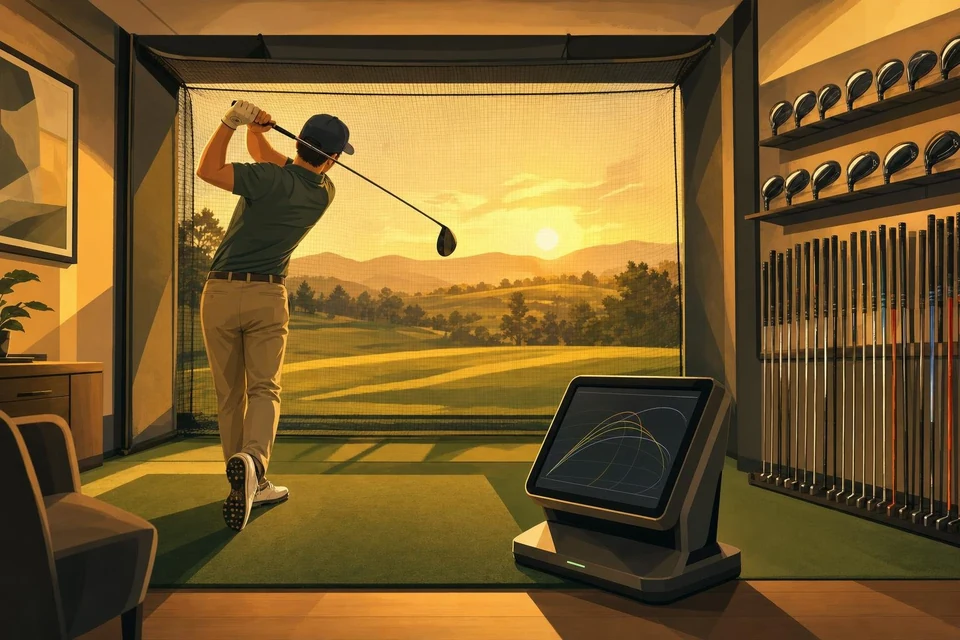
Most golfers buy clubs the way they buy jeans off a rail: pick a brand, try one on in the shop, hope it fits. For a long time that was the only option. Over the past two decades launch monitors became cheap enough for every serious fitter to own one, and custom fitting moved from a tour-player luxury to something a club golfer with a 20 handicap can book on a Saturday morning.
Whether it is worth paying for depends on how often you play, what you are buying, and whether your swing has settled down enough that the measurements will still be valid next year.
What a fitting actually measures
A good fitter starts by watching. Before a single number appears on a screen, they will ask about your game, your misses, your current clubs and what you want to improve, then watch a few shots with your own equipment. That baseline matters, because the point of the session is to beat it.
The physical measurements come next. Height and the distance from wrist to floor give a starting point for club length. A golfer of 6ft 3in with short arms may need standard length; one of 5ft 9in with long arms might need shorter clubs than the off-the-shelf set. Hand size and finger length determine grip size, which affects how freely the hands release through impact.
Lie angle is often the biggest single fix for irons. It describes the angle between the shaft and the sole of the club when it sits on the ground. If the toe points up at impact, the face tends to aim left; if the heel is up, it points right. Fitters check this with tape on the sole and a hard lie board, reading where the mark lands, or increasingly from launch monitor data. A correction of one or two degrees can straighten a whole set.
Shaft flex, weight and length
Shaft choice is where most fitting sessions spend their time, and where most golfers get it wrong on their own. Flex labels such as regular, stiff and extra stiff are not standardised between manufacturers, so a regular shaft from one brand can be firmer than a stiff from another. A fitter works from your swing speed and, just as importantly, your tempo and the point in the downswing where you release the club.
Weight affects timing more than people expect. A shaft that is too light can make a fast swinger lose control of the clubface; one that is too heavy can rob a slower swinger of speed late in a round. Length links back to both. A driver that is half an inch shorter than standard will usually find the centre of the face more often, which often adds more distance than the extra length would have.
Launch monitor data and what it tells you
Launch monitors such as TrackMan and Foresight’s GCQuad measure the ball and, in some cases, the club at impact. The fitter is looking at a handful of numbers: ball speed, launch angle, spin rate, carry distance and, above all, how widely the shots scatter. Peak distance is less important than it looks on the screen. A driver that sends one ball 260 yards and the next into the trees is worse than one that sends both 245 yards down the middle.
twice down the middle beats 260 once and the trees the next time. Scatter matters more than peak distance.
Spin is the number amateurs tend to overlook. Too much spin with a driver makes the ball balloon and fall short in the wind; too little with irons means approach shots that will not stop on the green. Changing the head, the loft or the shaft can move spin by hundreds of revolutions per minute.
A typical session runs through a sequence like this:
- Interview and warm-upInterview and warm-up with your own clubs, recording baseline numbers.
- Static measurementsHeight, wrist-to-floor, hand size.
- Head testingHead testing, often with a neutral shaft, to find the best shape and loft.
- Shaft testingShaft testing with the chosen head, comparing flex, weight and profile.
- Fine-tuningLie angle and length fine-tuning, then a final comparison against the baseline.
When fitting is worth the money
For a golfer who plays at least twice a month and is buying new irons or a driver, a fitting is almost always worth it. The cost of the session is small against the price of the clubs, and many fitters deduct the fee if you buy from them. For a putter, fitting is underrated: length, loft and lie on a putter affect how you set up to every putt, and a few minutes on a putting analysis system often reveals a putter that simply does not suit your stroke.
It is harder to justify in two situations. The first is if you are about to start lessons and expect your swing to change substantially in the next six months, since the numbers will move with it. The second is if you are buying a single used wedge or fairway wood on a budget. In that case, the lie and length of your current irons are a decent guide.
Fitting for beginners
There is a common view that beginners should not get fitted because their swings are too inconsistent. It is half right. A full launch-monitor session for someone who has played four times is a poor use of money. A basic fitting for length, lie and grip size, though, can stop a beginner fighting equipment that is plainly wrong for their body, especially taller or shorter players and women using men’s sets passed down by a relative.
For a swing still settlingSkip the full launch-monitor session for now. A basic check of length, lie and grip size is enough until the swing repeats, and the coach will usually say when you are ready.
Many beginners are better off starting with a short block of lessons, such as those described in the beginner lessons guide, then getting fitted once they can make a repeatable swing. The coach will usually tell you when you are ready.
Demo days, studios and what fitting costs
Manufacturers including PING, TaylorMade, Titleist and Callaway run demo days at golf clubs and ranges, where a brand fitter brings a van of heads and shafts and a launch monitor. These are often free or cheap to attend, though the choice is limited to that brand. They are a sensible first step, and several of the larger driving ranges in London host them through the year.
Independent fitting studios test across several brands, which removes the incentive to steer you towards one manufacturer. Prices vary widely by studio and by what you are being fitted for. As a rough guide, a single-club fitting tends to fall somewhere around £50 to £100, and a full-bag fitting more like £100 to £250, often refundable against a purchase. Some retailers include fitting free if you buy the clubs through them, though the session can be shorter.
Before booking, ask whether the fitter is a PGA professional, which launch monitor they use and how many brands they stock. Ask too whether they offer a follow-up check after a few rounds. Good fitters do, and adjusting a lie angle by a degree after a month on the course is a small job.
- Is the fitter a PGA professional?
- Which launch monitor do they use?
- How many brands do they stock?
- Is the fee refundable against a purchase?
- Is there a follow-up check after a few rounds?
- Will you leave with a written fitting card?
Once you know your specifications, buying becomes easier. A written fitting card lets you compare like for like, and the guide to buying golf equipment in London explains where each route makes sense. The overview of the different types of golf clubs is the place to start if terms such as hybrid or gap wedge still need explaining.
FAQ
Frequently asked questions
How long does a golf club fitting take?
A single-club fitting, usually a driver or putter, takes 45 minutes to an hour. A full-bag session can run two to three hours. Book a time when you are rested, because tired swings give misleading numbers.
Should I take my current clubs to a fitting?
Yes. The fitter will want baseline numbers from what you play now, so the new options have something to beat. Bring your usual ball as well if you play one brand consistently.
Can women and juniors get custom fitted?
Both benefit, often more than the average male club golfer, since off-the-shelf sets assume a narrow range of height and speed. Junior fitting is usually about length and weight so the clubs can grow with the child.
Will custom-fitted clubs lower my handicap straight away?
Not overnight. Well-fitted clubs remove a few equipment-caused misses and tend to tighten dispersion, but the swing still does most of the work. Most golfers notice better contact and fewer big misses within a few rounds.