Women's golf
Ladies Golf Lessons in London: Beginners, Groups, Women-Only Coaching
Women-only golf coaching in London: group academies for beginners, England Golf and R&A initiatives, and the route from first lesson to a handicap.
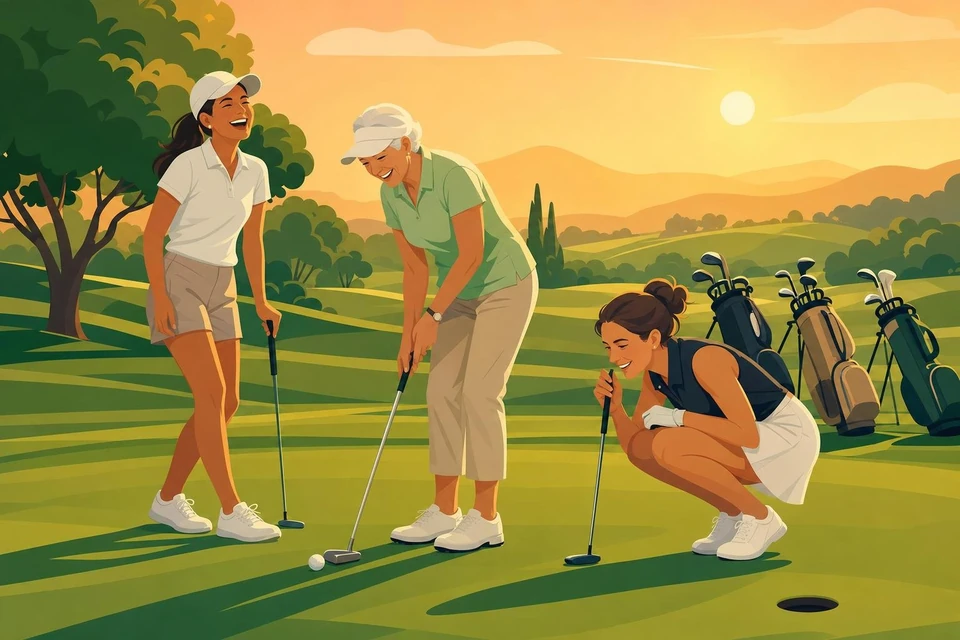
Ask women who took up golf as adults what nearly put them off, and the answer is rarely the swing. It is walking into a clubhouse where everyone seems to know the rules except them, or standing on a range next to a man who offers unsolicited advice after every shot. Women-only coaching exists largely to remove that friction, and it works: ladies golf lessons in a small group of other beginners are, for many women, the difference between trying golf once and actually playing it.
London has more of these programmes than it did a decade ago, run by golf clubs, driving-range academies and individual PGA coaches. They vary in format and price, but they share one idea: learn alongside people who are at the same stage, then move onto the course together.
Women-only group academies in London
The typical format is a course of four to eight weekly sessions, each an hour or so, with a PGA professional and a group of somewhere between four and eight women. The first weeks cover grip, set-up and a short swing with an iron; the middle weeks bring in chipping, putting and the longer clubs; the final session is often out on a par-3 or a few holes of the main course. Clubs are lent, and nobody expects you to own anything beyond comfortable shoes.
- First weeksGrip, set-up and a short swing with an iron.
- Middle weeksChipping, putting and the longer clubs.
- Final sessionOut on a par-3 or a few holes of the main course.
- AfterwardsOften a regular playing group with the same women.
What makes the women-only version different is less the content than the atmosphere. Coaches who run these groups tend to spend more time on etiquette and confidence on the course, which is exactly the part beginners find most intimidating. The social side matters too. Several groups that started as a six-week course carry on long afterwards as a regular playing group, which is how many women find their first golfing friends.
Individual ladies golf lessons remain an option, and some women prefer them from the start. The general picture on price and formats in the guide to golf lessons for beginners applies here as well; women-only group courses in London tend to sit in the same rough range as mixed ones.
Ladies golf lessons for beginners: what to look for
Three questions sort out most of the choice.
- What happens after the course?An improvers' group, supervised play or a route into membership.
- Who coaches?A PGA professional with real experience of women's golf coaching and of beginners.
- When are the sessions?Evenings and weekend mornings fill first; daytime groups are smaller.
First, what happens after the course? A good academy has a next step: an improvers’ group, a supervised playing session, a route into club membership or nine-hole competitions. A course that simply ends after six weeks leaves women to find their own way onto the course, which is where many drop out.
Second, who coaches? A PGA professional brings recognised training and safeguarding checks. Some women prefer a female coach, and London has a reasonable number; others find a male coach who understands how women typically differ in strength and flexibility just as good. It is perfectly reasonable to ask a coach how many beginner women they teach.
Third, when are the sessions? Weekday evenings and weekend mornings fill first. Some clubs run daytime groups that suit women working part-time or with school-age children, and those tend to be smaller.
Equipment deserves a short note. Women’s clubs are generally shorter, lighter and more flexible in the shaft than men’s, but height, strength and swing speed matter far more than the label. A tall, strong woman may be better off in a standard set. The page on the different types of golf clubs explains the basics before any purchase.
Cost and commitment for women’s groups
Women-only group courses in London are usually priced per course rather than per session. As a rough guide, a four- to eight-week beginners’ group with a PGA professional tends to cost somewhere between £60 and £180 per person, with clubs lent and range balls included. Introductory taster sessions are often cheaper, and around Women’s Golf Day some venues run them free. These are typical ranges, not any particular venue’s prices.
- £60–£180per person for a four- to eight-week group, typically
- 4–8women in a usual academy group
- 1 houra week is enough to learn the basics
- 20 minof practice between lessons speeds things up
The bigger commitment is time. One hour a week is enough to learn the basics, but women who add a short practice session between lessons, even twenty minutes with a bucket of balls, progress noticeably faster. Many London ranges stay open late, which makes a midweek practice slot realistic for anyone working in the centre.
It is worth asking at the start whether missed sessions can be made up. Life gets in the way, especially for women juggling work and children, and a coach who lets you join another group’s session for a missed week is a good sign.
A word on kit for the first course: nothing beyond comfortable clothes, trainers and a glove if you like one. The urge to buy a shiny matching starter set in week two is strong, and best resisted until a coach has seen your swing.
England Golf and R&A initiatives for women
National bodies have put real effort into women’s and girls’ golf over the past decade. England Golf, the governing body for amateur golf in England, runs girls’ programmes such as Girls Golf Rocks for beginners aged roughly five to eighteen, listed on its Rocks and Rookies page, and counts championing the women’s game as part of its strategy to 2030. The England Golf Trust, its charity, offers grants and bursaries with a particular focus on women and girls.
The R&A, which runs golf’s rules and the Open, launched the Women in Golf Charter, which clubs, counties and other organisations sign to commit to increasing women’s participation. A club signing it is not proof of a welcoming culture, but it does show the club has thought about the issue and usually means there is someone responsible for it.
Then there is Women’s Golf Day, an international event held each year in early summer, when clubs and ranges around the world run free or low-cost taster sessions for women. In London it is one of the easiest ways to try golf with no commitment, and the event’s website lists participating venues.
Learning in groups and moving to the course
The jump from range to course is the moment most beginners lose confidence, and group programmes are at their best here. Playing the first few holes with three other women who are just as unsure is far easier than joining a stranger’s four-ball.
A sensible progression runs like this: a group beginners’ course, then an improvers’ group or a run of supervised nine-hole sessions, then regular nine-hole rounds with friends from the group. Many London clubs on the outskirts, and the pay-and-play courses inside the city, welcome nine-hole golf at quieter times. Knowing the essentials of the rules of golf – where to drop, how to mark a ball on the green, when to let faster groups through – removes most of the anxiety.
From lessons to a handicap
A handicap is not compulsory, but it opens doors: club competitions, open days at other courses, and fair games against better players. Under the World Handicap System, introduced in Great Britain and Ireland in 2020, a new golfer gets an initial Handicap Index by submitting scores from 54 holes in total, which can be made up of nine- and eighteen-hole rounds. The maximum index is 54, which means a beginner does not need to be good to get one.
In England there are two ways in. Club membership includes a handicap. For women not ready to join a club, England Golf offers iGolf, a subscription that provides an official handicap and some insurance without a home club. Many women start with iGolf and join a club later, often one they discovered through an academy.
Clubs that welcome women
Golf’s reputation for unwelcoming clubhouses was earned, and some of it lingers. Things are changing fast, though. Single-sex membership policies have largely gone at English clubs, many now have women’s captains and active women’s sections, and several actively market to new women members with reduced first-year fees or flexible memberships.
The best test is simple. Visit, ask to speak to the women’s captain or the club’s women’s development contact, and see how the question is received. A club that has a ready answer about groups, roll-ups and beginner competitions is very likely a good place to learn. One that looks puzzled is telling you something too.
Before you joinAsk for the women's captain or the women's development contact. A ready answer about groups, roll-ups and women's golf coaching for beginners is the best sign a club welcomes new members.
And if golf on a full course still feels a long way off, there is no shame in spending a few evenings at a range or even a crazy golf course with friends first. Plenty of regular women golfers say that is exactly how it started for them.
FAQ
Frequently asked questions
Are women-only golf groups only for complete beginners?
No. Many academies run a beginners' course and then an improvers' group for women who can already hit the ball but want to get onto the course. Some clubs also have regular women's roll-ups, which are informal playing groups rather than lessons.
Which tees do women play from?
Most courses have forward tees, and under the World Handicap System anyone can play from any set of tees as long as the course has a rating for them. Many women play the red tees, but the choice is about length and enjoyment, not a rule.
Do I need to join a club to get a handicap?
Not necessarily. In England a golfer can hold a handicap through a club membership or through iGolf, England Golf's subscription for golfers without a home club. Both lead to the same World Handicap System index.
Is it worth taking lessons with a female coach?
Some women prefer it and some do not mind either way. The qualities that matter are clear explanations, patience and coaching that suits your body; ask about the coach's experience with women beginners rather than assuming the answer.
How many women play golf in a typical London academy group?
Group sizes are usually small, often somewhere between four and eight, so the coach can watch everyone. Bigger taster events, such as those around Women's Golf Day, can be much larger and more social.