Equipment
Buying Golf Equipment in London: Shops, Used Clubs, Beginner Sets
Where to buy golf equipment in London: specialist shops, big retailers, online and second-hand, what a beginner set needs and why to try before buying.
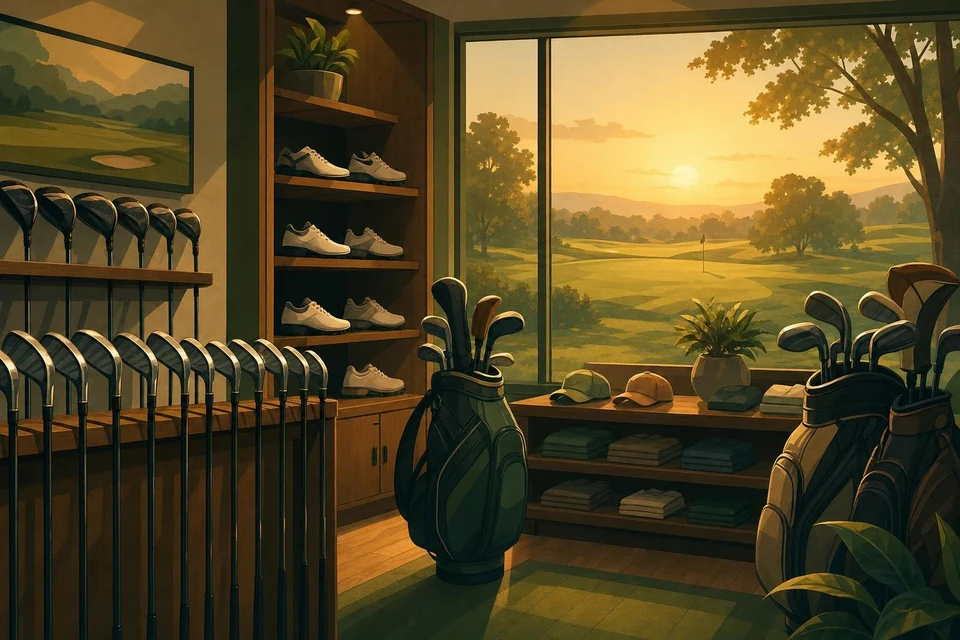
London has more places to buy a golf club than to play one. Between the chain stores on retail parks, the pro shops at every club and range, a handful of independent specialists and the whole of the internet, the question is less where to find equipment than how to avoid paying for the wrong thing.
The answer depends mostly on where you are in the game. A complete beginner, a returning golfer dusting off a 15-year-old set and a single-figure player replacing a driver need different shops and different advice.
Specialist golf shops and pro shops
The pro shop at a golf club or driving range is the most underused option in London. Stock is usually small, and prices are rarely the lowest in town. What you get instead is a PGA professional who may have watched you swing, will let you hit clubs on the range before you pay, and will still be there in three months if something needs adjusting. For a putter, a wedge or a first proper set, that advice can be worth more than the discount elsewhere.
Independent specialists sit between the pro shop and the big chains. Several in and around the capital have fitting bays with launch monitors, stock a range of brands, and can build clubs to a specification. The better ones will tell you when the clubs you already own are fine. If one tries to sell you a full new bag within ten minutes of meeting you, leave.
Big retailers and online
American Golf is the largest specialist chain in the UK and has stores across Greater London, along with an online shop. Large chains carry the widest choice of current models and can be competitive on price, especially in sales. Many stores have a hitting bay with a launch monitor and staff who can run a basic fitting. The experience varies by branch and by who is working that day; a Tuesday morning visit gets far more attention than a Saturday afternoon.
Online retailers, including the manufacturers’ own sites, are good for things you already know: a box of the ball you always play, a glove in your size, a replacement grip. They are a risky place to buy clubs you have not hit. Return policies on used clubs vary, and a driver that looked perfect in a video can feel completely different in your hands. If you are buying specified clubs from a custom fitting, ordering them online makes more sense, provided the retailer can build to the specification on your fitting card.
Pro shop
A PGA professional who may already have watched you swing.
- Hit clubs on the range before you pay
- Still there in three months for adjustments
- Small stock, rarely the lowest price
Independent specialist
Fitting bays, several brands, clubs built to a specification.
- The good ones say when your clubs are fine
- Walk out if pushed to a full new bag
Big retailer or online
The widest choice of current models.
- Competitive on price, especially in sales
- Risky for clubs you have not hit
Second-hand clubs
Golf equipment loses value fast and wears slowly, which makes the used market unusually good. A driver that cost several hundred pounds new can be found for a fraction of that two or three years later, and it will hit the ball almost as far as this year’s model. For irons, the difference between generations is smaller still.
The safest places to buy used are trade-in sections at retailers, specialist used-club dealers that grade condition and offer returns, and pro shops, which often take trade-ins from members. Private sales on marketplace sites can be good value but carry more risk: counterfeit clubs are a real problem, especially for premium brands, and a price that looks too good usually is. If a seller will not let you see the club before paying, walk away.
Check the grips first, since worn grips are cheap to replace but easy to forget in the total cost. Look along the shaft for dents, rust or a bend, and check the clubface for heavily worn grooves on wedges. A club that has been reshafted is not necessarily a problem, but ask what shaft it now has and whether it suits your swing.
- See the club before paying
- Grips worn or still tacky
- Shaft free of dents, rust and bends
- Wedge grooves not worn smooth
- If reshafted, which shaft and does it suit you
- Returns offered by the seller
- A price that looks too good usually is
What a beginner set actually needs
The Rules of Golf allow up to 14 clubs in the bag. A beginner needs perhaps half that. A sensible first set is a driver or a fairway wood that is easy to hit off a tee, one or two hybrids in place of the long irons, irons from about 6 or 7 through to the pitching wedge, a sand wedge and a putter. Many players never miss the clubs they did not buy.
Boxed starter sets from the major brands are designed with that in mind and are a good choice for most beginners. They come with a bag, are built to be forgiving, and cost a few hundred pounds. The overview of the various types of golf clubs explains what each one is for if the labels are unfamiliar.
What a beginner should not buy is a set of blade irons because a favourite professional uses them, or a low-loft driver because the shop assistant swung it well. Forgiveness and height are what a newer golfer needs. Distance comes later, with practice and, ideally, some beginner lessons.
Beyond clubs, the list is short: a dozen balls, a glove, tees, a pitch-mark repairer, and shoes that will be accepted on the courses you plan to play. Waterproofs can wait until you have played through one wet round and decided you want to do it again.
Trying before you buy
Every route above is better with a test first. Most specialist shops and chains have a hitting bay; most pro shops will let you take a demo club to the range. Manufacturer demo days at London driving ranges and clubs are another chance to hit several models side by side, usually free.
When you test, hit at least ten balls with each club you are considering, and pay more attention to the bad shots than the good ones. The club you are looking for is the one whose misses are smallest, not the one that produced a single perfect strike. Take your current club along for comparison. Sometimes the old one wins, and that is the cheapest result of all.
Caddie's wordJudge a test club by its misses, not its best strike, and take your current club along. Sometimes the old one wins.
There is one more reason to try first, and it has nothing to do with numbers. A club you like the look of at address tends to get swung with more confidence, and confidence is worth a couple of yards. Fitters will not admit it on a spreadsheet, but most of them have watched a golfer pick the slightly worse club and play better with it.
FAQ
Frequently asked questions
How much should a beginner spend on a first set of golf clubs?
A boxed starter set from a major brand generally costs a few hundred pounds, and a good used half-set can be found for less. Spending more before you know whether you will stick with the game rarely makes sense.
Are used golf clubs a good idea?
Usually, yes. Clubs lose value quickly in their first two years but play almost as well as new. Check the grips, the shaft for dents or rust, and the face grooves, and budget for new grips if they are shiny or cracked.
What golf balls should a beginner buy?
Cheap, durable two-piece balls or good-condition lake balls. Expensive tour balls add spin a beginner cannot use and cost far more to lose, and new golfers lose plenty.
Do I need golf shoes from day one?
Not necessarily. Trainers with good grip are fine at most ranges and some short courses, but many clubs require golf shoes on the course. A spikeless pair is the most versatile first buy.
When is the best time of year to buy golf clubs?
Late in the year and early in the new year, when the previous season's models are discounted ahead of new launches. The differences between consecutive model years are usually small.